

- Water Testing Meters
- Anemometer
- Length & Distance Meter
- Multimeter & Clamp Meter
- Light and Sound Meter
- Slide Calipers & Screw Gauge
- Thermometer & Hygrometer
- Milk Testing Meters
- Paper, Grain & Wood Testers
- Stopwatch & Timers
- Soil Testing Meters
- Refractometers & Analyzer
- Magnetic Compass
- Tachometer & Megger
- Thickness & Dia-Meters
- Other Meter And Accessories
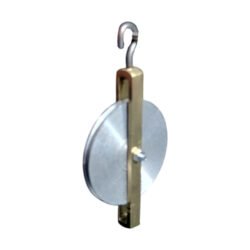
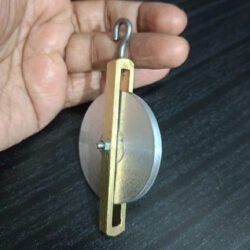
A Small Crane for Physics Experiments is a practical and educational laboratory apparatus designed to demonstrate fundamental principles of mechanics such as force, load, pulley systems, and torque. Commonly used in school, college, and university physics labs, this compact crane model helps students understand real-world lifting mechanisms through hands-on experimentation.
Constructed from durable metal or high-quality materials, the small crane typically features a stable base, adjustable arm, and pulley system for lifting small weights. It is ideal for demonstrating concepts like mechanical advantage, equilibrium, and work-energy relationships in a clear and engaging way.
This apparatus is widely used in classroom demonstrations, lab experiments, and STEM education activities to enhance conceptual learning and practical understanding.
Key Features:
- Compact and durable design for laboratory use
- Demonstrates pulley systems and lifting mechanisms
- Ideal for teaching force, torque, and mechanical advantage
- Easy to assemble and operate for students
- Suitable for repeated classroom and lab use
Common Applications:
- Physics lab experiments on force and motion
- Demonstration of pulley and crane systems
- STEM education and practical learning
- Classroom teaching aids for mechanics